
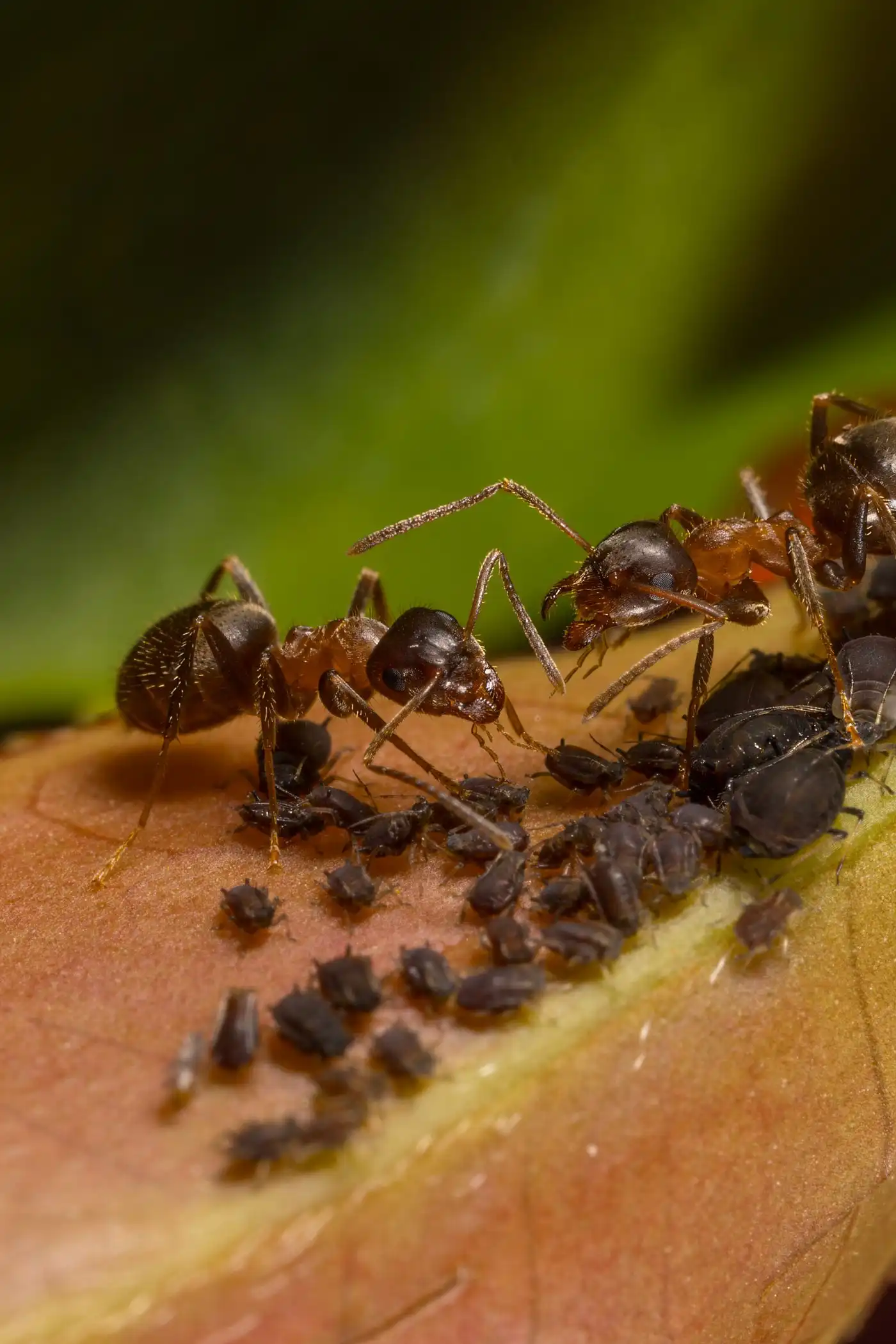
Find the trail, use bait instead of spray, seal the way in and fix the moisture that drew them. Wiping away ants does not end the problem, because the colony keeps sending workers, and the ants you see are a small part of it. Call a professional when the colony is inside a wall, the ants keep returning, or fire ants are in the yard.
How Do You Get Rid of Ants in Your House?
Follow the trail to the entry point, bait the colony, seal the gap and remove what drew the ants in. This works for most household ants, and each step covers a gap the others leave.
The colony is the problem, not the trail. A wipe of the counter clears the ants you see, and the colony sends more along the same route. The steps below go after the source.
Which Ants Are in Your Florida House?
The ants in a Florida home are usually one of a small group of common pest species. UF/IFAS lists the most commonly encountered ones: pharaoh, white-footed, Argentine, ghost, pyramid, carpenter, rover, native fire, imported fire, crazy, thief, Caribbean, acrobat and big-headed ants.
It helps to think in two groups. Some ants trail across kitchen counters and bathrooms, and others live in the yard and nest in the ground, along sidewalks and under slabs. Imported fire ants belong to the yard group, and they sting.
You do not need to identify the species to take the first steps. Identification matters more when ants return after treatment, because different ants respond to different baits. Save a few ants in a sealed bag for a professional to see.
Why Do Ants Come Inside After Rain or Heat?
Heavy rain floods nests and drives ants to higher, drier ground, which can be your house. UF/IFAS notes that after heavy rain, a fire ant colony may move to higher ground or inside homes.
Moisture draws ants too. A leaking pipe, a wet sink or a damp cabinet gives them water, and crumbs and sticky spills give them food. That is why problems often spike after storms and during Florida summers.
Step One: Find the Trail and the Entry Point
Watch where the ants walk and note where they enter. Small ants such as white-footed and rover ants fit through very small openings, and UF/IFAS says sealing cracks and holes can stop many invasions.
Check around window frames, door sills, utility lines and the places where pipes pass through a wall. Seal what you find with caulk. Trim any shrubs or branches that touch the house, because they give ants a bridge.
- Wipe up crumbs, spills and sticky residue right away
- Store food in sealed containers and keep pet food off the floor overnight
- Fix dripping pipes and wipe down wet sinks
- Seal small gaps around windows, doors and pipes
- Trim shrubs and branches that touch the house
Step Two: Bait, Do Not Just Spray
Bait works better than a contact spray, because ants carry it back to the nest. UF/IFAS says baits are the most effective way to get insecticide into the nest, since ants share food.
A spray kills the ants it touches and leaves the colony alone, and it may scatter them into new routes. If you use bait, place it near the trail and leave the trail alone for a few days, so the ants can carry it home. Always read the label, and keep any product out of reach of children and pets.

Do Home Remedies Like Vinegar and Citrus Work?
The evidence for home remedies is limited. Vinegar and citrus can clear a trail for a day, but nothing in the UF/IFAS guidance shows that they remove a colony. UF/IFAS also notes that some home treatments for fire ants are ineffective.
A wipe with vinegar and water is fine for cleaning up a trail. Just do not count on it to end the problem, and do not keep reapplying it in place of treating the source.
Fire Ants in the Yard
Fire ants need a different approach, because their colonies live in the ground and defend it. Imported fire ants nest in lawns, along sidewalk edges, under patio slabs, under foundations and sometimes in electrical boxes.
The sting delivers venom that causes a white pustule about a day later, so keep children and pets away from mounds. UF/IFAS lists mound drenches and excavation as options, and it notes that broadcast baiting may reduce the native ants that slow fire ants down.
City Green offers specialty treatments, including for fire ants, on our ant, cockroach and spider control page.
When to Call a Professional
Call when ants return after a week of cleaning and sealing, when you cannot find the entry point, or when fire ants are in the yard. UF/IFAS describes baits controlling ghost ant colonies in wall voids, so a store bait can work indoors, but it takes patience and the right placement. A professional adds identification of the species, a search for the nest and follow-up visits.
A treated perimeter keeps many pests from reaching the door. Our perimeter and interior pest control service starts as low as $25 per service, and our post on how much pest control costs in Citrus County shows what changes the price. We serve Hernando, Beverly Hills and the rest of Citrus County, with free estimates and no contracts.
We do not treat termites. If you see winged insects or damaged wood, call a company that offers termite service.
Key Takeaways
- The colony, not the trail, is the real problem.
- Baits carry insecticide into the nest, so bait works better than spray.
- Seal entry points and fix moisture and food sources.
- Evidence for vinegar and citrus as a cure is limited.
- Fire ants need specialty treatment, and we do not treat termites.
Frequently Asked Questions
What kind of ants do I have in my Florida home?
Common Florida pest ants include pharaoh, white-footed, Argentine, ghost, carpenter, crazy and fire ants. Several look alike. If treatment does not work, a professional can identify the ant and choose a bait to match.
What is the best ant killer for a Florida house?
A bait is the best choice for most household ants, because ants share it with the colony. We do not recommend product names here, and the label on any product you buy should match the ants you have.
Does vinegar get rid of ants?
It can clean a trail, but the evidence that it ends a colony is limited. Use bait and sealing for the source.
How do I treat fire ants in my yard?
UF/IFAS lists mound drenches, excavation and baiting as options, and it notes some home treatments do not work. City Green offers specialty treatments for fire ants, so call for a free estimate.
Do you treat termites?
No. City Green does not offer termite, bed bug, wildlife or bee removal. If you suspect termites, call a company that offers that service.
Related Services and Areas
Questions about your own property? Contact the City Green team or visit the home page to see everything we do.
- Ant, Cockroach & Spider Control
- Perimeter & Interior Pest Control
- Pest Control in Hernando, FL
- Pest Control in Beverly Hills, FL
More From Our Blog

How Often to Fertilize a Lawn in Citrus County, FL
How often you can fertilize a lawn in Citrus County is set by the county ordinance. Learn the allowed months and why timing and product matter.
Read This Article
When Can You Fertilize a Lawn in Citrus County, FL?
Citrus County lets you fertilize a lawn only in April, May and October. See what the county rules require and how City Green follows them.
Read This Article
How Much Does Pest Control Cost in Citrus County, FL?
What affects the price of pest control in Citrus County, what perimeter service can cost, and how to compare quotes fairly before you hire anyone.
Read This ArticlePublished
Written by Katharine Osborne, Owner and Operations Manager, City Green Pest Control & Fertilization. Katharine handles the office and the customer relationships at City Green.